
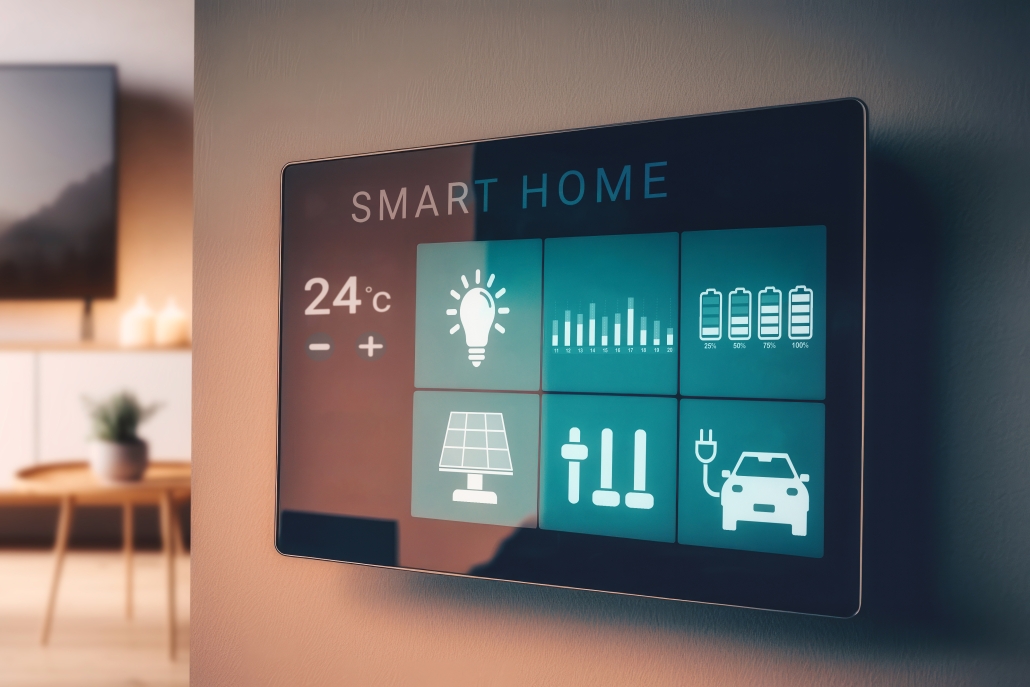
Home Automation and Security: How Ottawa Homeowners Are Combining Both
Ottawa homeowners are increasingly asking about combining home automation with their security systems, and the reasons are practical rather than aspirational. When your security system can also control your thermostat, manage access codes for service providers, let you check a doorbell camera from your phone, and arm itself when you leave the neighborhood, it is doing significantly more than a traditional alarm ever could. That additional capability is also changing what people expect from a security installation.
The shift is not happening because home automation has become a luxury purchase. It is happening because the technology that makes it possible has become genuinely affordable and, more importantly, because it integrates with alarm systems in ways that make both functions more useful than they would be separately. For Ottawa homeowners who spend part of the year at a cottage, who manage rental properties, or who simply want meaningful visibility into what is happening at home when they are not there, the combination of automation and security is not a premium upgrade. It is a practical decision.
This article explains what home automation actually covers, how it makes a security system more capable, what the Alarm.com platform does in concrete terms for Ottawa homeowners, and what the integration realistically costs.
What Home Automation Actually Means
The phrase home automation is applied loosely in consumer marketing and covers a wide range of things, from a single smart light bulb controlled from a phone app to a fully integrated system where lighting, locks, thermostats, cameras, and environmental sensors all communicate with each other and respond to conditions or schedules automatically. For the purposes of a home security installation, the relevant definition is narrower and more useful.
Home automation in a security context refers to the integration of smart devices throughout the home into a single platform that allows them to be controlled remotely, scheduled, and triggered by rules or conditions. The devices typically include:
- Smart locks: Keypad or app-controlled locks that allow remote locking and unlocking, the creation and deletion of access codes for specific users, and activity logs showing when doors were opened and by whom.
- Smart thermostats: Thermostats that can be controlled remotely, scheduled to reduce consumption when the home is empty, and integrated with the security system so that certain conditions, like the alarm being disarmed, trigger temperature changes automatically.
- Smart lighting: Lights that can be controlled remotely, set to schedules, or triggered by motion or the status of other devices. From a security perspective, lighting that activates when motion is detected or when the system detects an unusual event adds both deterrence and utility.
- Video doorbells and cameras: Cameras that provide live and recorded footage accessible from a smartphone or computer, with motion-triggered alerts and the ability to communicate two-way through the doorbell.
- Garage door controllers: Remote open and close capability with activity notifications, integrated into the same platform as the rest of the system.
- Environmental sensors: Water leak detectors, temperature sensors, carbon monoxide detectors, and smoke detectors that feed into the same monitoring platform as the security system.
The key distinction between a genuine integrated home automation system and a collection of individual smart devices is the platform layer. A thermostat controlled by one app, a doorbell on a second app, and a security system on a third is not home automation in any meaningful sense. The value comes from unification: a single platform that lets these devices communicate with each other and that presents the homeowner with a coherent picture of the home from one interface.
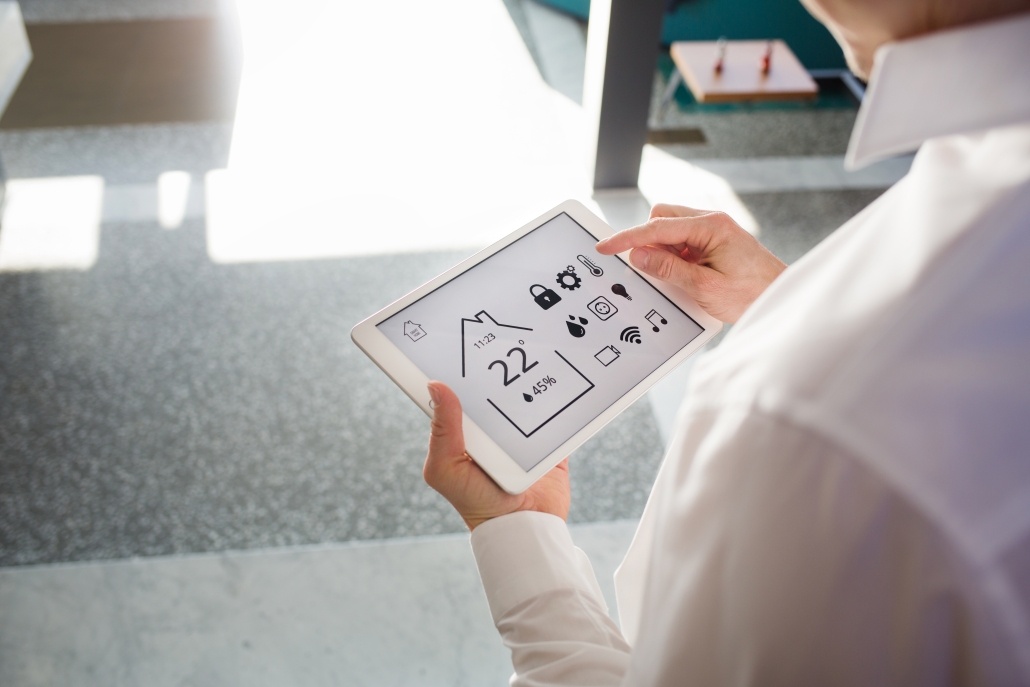
How Home Automation Makes Your Security System Smarter
A standalone alarm system does one thing: it detects a condition, triggers a siren, and sends a signal to a monitoring station. That is useful. An integrated system does considerably more, and the added capability changes how homeowners relate to their security in day-to-day terms.
- Arming and disarming becomes contextual. A system integrated with a smart lock can arm automatically when the door is locked and disarm when a recognized code or fob is used to enter. A system with geofencing can arm itself when the homeowner’s phone leaves a defined radius around the property and disarm as they approach. These are not gimmicks. They address the most common reason security systems fail: human error. Homeowners who forget to arm their system before leaving or who disarm and forget to rearm are the rule, not the exception. Automation removes that variable.
- Monitoring becomes active rather than passive. With automation integration, the security system is not only watching for break-ins. It is watching for temperature drops that could indicate furnace failure in winter, water presence near a sump pump or under a sink, carbon monoxide levels, and other environmental conditions. For Ottawa homeowners, where temperatures in January and February regularly reach minus 20 or below, a sensor that alerts you to a heating failure while you are away is genuinely significant. The cost of a frozen pipe in an Ottawa home can exceed the cost of a full security and automation installation.
- Video verification changes the monitoring response. When an alarm is triggered, monitoring stations face a problem: a high percentage of triggers are false alarms, and responding to all of them as though they were real creates inefficiency. When video is integrated with the alarm system, the monitoring station can view a live or triggered clip from the property before dispatching. This reduces false alarm dispatches and, more importantly, accelerates the response when a real event is occurring.
- Access becomes granular and trackable. A traditional key gives access to everyone who holds it, with no record of when or how it was used. A smart lock with a managed access code system gives the homeowner the ability to create a code for a cleaning service that is active only on Tuesday mornings, a code for a contractor that expires at the end of the project, and a code for a family member that logs activity. From the homeowner’s phone, the activity log shows every entry and exit, timestamped and identified by user. That is a fundamentally different level of control.
- The system becomes useful every day, not just in emergencies. This is perhaps the most underappreciated aspect of integrated home automation. A traditional alarm system is noticed only when it triggers. An integrated system is something homeowners interact with daily: checking the doorbell camera while working, adjusting the thermostat on the way home, checking whether the door was locked before bed, receiving a notification when the kids get home from school. That daily usefulness is what turns a security investment into a home management tool.
The Alarm.com Platform — Why Integration Matters
Alarm.com is the platform behind a significant portion of professionally monitored home security and automation systems in North America, and it is the platform that Barnes Protection Services uses to deliver integrated security and automation to Ottawa homeowners. Understanding what it does in practical terms, without the marketing layer, helps homeowners evaluate whether it is the right fit for them.
Alarm.com is not a consumer smart home platform like Apple HomeKit or Google Home. It is a professional-grade platform designed specifically for the security industry, built around the relationship between a monitoring company, the installed equipment, and the homeowner. The key difference is the monitoring integration: the same platform that shows the homeowner their camera feed, lock status, and thermostat setting is also the platform that the monitoring station uses to receive alarm signals, view video, and coordinate emergency response. That unification is what makes Alarm.com genuinely different from a collection of consumer smart home products.
What Alarm.com provides in practical terms for Ottawa homeowners:
- A single app for all devices. Cameras, locks, thermostats, garage doors, lights, and the security system itself are all accessible from one interface. No switching between apps, no separate logins for different device brands.
- Real-time notifications with context. Alarm.com sends push notifications for specified events: when a door opens or closes, when motion is detected, when a lock code is used, when the alarm is armed or disarmed, when an environmental sensor triggers. These notifications are configurable, so homeowners can choose to receive only the alerts that are meaningful to them rather than being notified of every minor event.
- Geo-services. The platform includes location-based automation that uses the homeowner’s phone location to trigger events. Approaching home can trigger the thermostat to begin warming the house. Leaving a defined area can trigger the system to arm. Multiple family members’ phones can be managed independently on the same account.
- Access management. User codes for smart locks can be created, modified, and deleted from the app from anywhere. Each code can be assigned a schedule and a name, and the activity log records every use. This is the feature Ottawa homeowners with rental properties, cottages, or service providers coming and going find most useful.
- Video analytics. Alarm.com’s video platform includes basic analytics that distinguish between motion types, reducing the number of irrelevant notifications. Cameras can be set to alert for person detection specifically rather than triggering on every passing car or moving branch.
- Energy management. Thermostat integration allows for scheduled temperature control tied to the alarm status. When the system is armed away, the thermostat can automatically shift to an energy-saving mode. When it is disarmed, it can return to the comfort setting. For Ottawa homeowners with gas heating, the savings over a winter season are measurable.
Barnes Protection Services has been installing and maintaining security systems in Ottawa for over three decades, and the addition of Alarm.com as the platform for integrated systems represents what three decades of customer feedback has consistently identified as the gap in traditional security: it gives homeowners a meaningful connection to their property rather than a system they only think about when something goes wrong. Monitoring through Barnes starts at $20 per month plus HST, with Alarm.com’s interactive services available as an add-on that most Ottawa homeowners find worth having.
The Specific Features Ottawa Homeowners Use Most
The Ottawa region creates specific circumstances that shape how homeowners use integrated security and automation. Proximity to cottage country, the reality of Ottawa winters, the prevalence of urban rowhouse and semi-detached properties, and the number of homeowners who manage rental properties or Airbnb-style short-term rentals all influence which features get used most.
Remote Monitoring for Cottage Country
A significant number of Ottawa homeowners also own or share a cottage in the Rideau Lakes, Calabogie, or Gatineau Hills region. Managing the security and environmental status of a second property that may be unoccupied for weeks at a time is exactly the use case that integrated remote monitoring was designed for. A temperature sensor at the cottage that alerts the homeowner when the interior drops below a set threshold, integrated with a camera that can be checked from the Ottawa home before calling a neighbour or contractor, is a combination that has prevented significant property damage. Alarm.com’s platform extends to secondary properties, allowing the homeowner to manage both properties from the same app and receive alerts for either.
Smart Doorbells for Urban Ottawa Homes
For homeowners in Ottawa’s denser urban neighbourhoods, from the Glebe and Centretown to Westboro and Hintonburg, the video doorbell is often the single most used feature of an integrated security system. Package theft from front porches is a consistent issue in urban Ottawa, and a doorbell camera that captures activity, sends motion alerts, and allows two-way conversation with whoever is at the door addresses it directly. Barnes Protection Services installs smart video doorbells as part of its integrated offering, with the footage feeding into the same Alarm.com platform as the rest of the system. Doorbell activity logs in the same timeline as lock activity and alarm events, giving the homeowner a coherent record rather than siloed data from a separate device.
Access Codes for Service Providers and Rental Properties
Ottawa has a high concentration of investment property owners and an active short-term rental market. For both groups, the ability to manage access codes remotely is a practical requirement that used to require physical key management and considerable trust. A cleaning company that needs access between one checkout and the next can be given a code that is active for a two-hour window. A maintenance contractor can be given a code that expires at the end of the day. A long-term tenant can be given a permanent code that is deleted the day they vacate. The homeowner sees exactly when each code was used, from their phone, wherever they are. That kind of access management was not realistically available to residential property owners five years ago. It is available now, at a cost that makes sense for any Ottawa homeowner managing more than one property.
Energy Management Through Thermostat Automation
Ottawa’s climate makes thermostat automation more valuable than it is in more temperate cities. A winter that regularly sees temperatures below minus 20 degrees Celsius, combined with Enbridge natural gas costs that have risen meaningfully over the past several years, means that a thermostat that automatically drops setback temperatures when the system is armed away and returns to comfort settings when the system is disarmed is producing real savings. The Barnes Protection and Alarm.com integration allows the thermostat to respond to alarm status rather than only to a fixed schedule, which means homeowners who come and go at irregular times benefit more than they would from a standard programmable thermostat. There is also a safety dimension: the same integration that manages comfort settings can be configured to keep the home above a minimum temperature threshold even when the homeowner is away, protecting pipes and the property itself during Ottawa’s harshest periods.
What Home Automation and Security Integration Actually Costs in Ottawa
Cost is the most practical question and also the one most frequently answered vaguely by security companies, which is why it deserves a direct treatment here.
The cost of an integrated security and home automation system from Barnes Protection Services in Ottawa has two components: the equipment and installation cost, and the ongoing monthly monitoring fee.
Equipment and installation: Barnes Protection Services offers free risk assessments to help homeowners understand what equipment makes sense for their property before committing to any investment. The specific cost depends on the size of the home, the number of zones, the devices included (cameras, smart locks, environmental sensors, thermostats), and whether the installation requires running any wiring or can be handled with wireless devices. Barnes uses wireless technology where possible, which keeps installation costs lower and avoids the need to open walls in finished homes. For a standard Ottawa home with a full perimeter sensor setup, one or two cameras, a smart lock, and a thermostat integration, equipment and installation costs typically fall in a range that most Ottawa homeowners find accessible without financing. The free risk assessment is the right first step.
Monthly monitoring: Barnes Protection Services monitoring starts at $20 per month plus HST for basic alarm monitoring. This is an unusually competitive rate for Ottawa given the scope of what is included: 24-hour monitoring, environmental monitoring for fire, temperature, and water at no additional charge, and monitoring through up to two communication paths for redundancy. Alarm.com’s interactive services, which add remote control, automation, and the full app-based feature set described in this article, are available as an add-on at a rate that most homeowners find represents good value relative to the daily usefulness they receive from the platform.
There are no hidden charges for additional monitoring types at Barnes. Environmental monitoring for low temperature, fire, and water is included in the base monitoring rate rather than being added as separate line items. This is worth noting because many Ottawa homeowners who have used larger national security companies have encountered monitoring structures where each additional sensor type carries an additional monthly fee.
For Ottawa homeowners who are comparing the cost of an integrated system against maintaining a traditional alarm plus separate smart home devices, the math usually favors integration. Separate consumer smart home devices from multiple brands, each with their own subscription or cloud storage fee, often cost more in aggregate than a professionally installed and monitored integrated system, while providing less reliability and no professional monitoring.
Conclusion
The combination of home automation and security has moved from a premium offering to a practical standard for Ottawa homeowners who want meaningful visibility into their property. The technology is reliable, the costs are accessible, and the use cases, from managing a cottage remotely through an Ottawa winter, to handling access codes for a rental unit, to simply knowing whether the front door is locked without getting out of bed, are ones that most Ottawa homeowners encounter regularly.
Barnes Protection Services has been installing and maintaining security systems in Ottawa and surrounding communities including Perth, Carleton, and Westport for over 30 years. The addition of the Alarm.com platform to the Barnes offering is a reflection of what three decades of customer relationships have made clear: homeowners want a system that is useful every day, not just in emergencies. That is what integrated home automation and security delivers.3

